

Most of the time your feet go unnoticed. It's not until you catch your little toe on the corner of the coffee table or you feel a blister forming that most people take a closer look and think about their valuable feet.
But what if you didn't feel a blister or your toe hitting the coffee table? Diabetes can cause serious foot problems, like not being able to feel the feet, poor blood flow, sores, and infections. So it's crucial for people living with diabetes to make their valuable feet a focus every day. But where do you start and what do you need to know?
For Diabetes Feet Day, we’re making feet the national focus. So join us as we advocate, educate and spread awareness to help improve foot health outcomes for people living with diabetes.

Most of the time your feet go unnoticed. It's not until you catch your little toe on the corner of the coffee table or you feel a blister forming that most people take a closer look and think about their valuable feet.
But what if you didn't feel a blister or your toe hitting the coffee table? Diabetes can cause serious foot problems, like not being able to feel the feet, poor blood flow, sores, and infections. So it's crucial for people living with diabetes to make their valuable feet a focus every day. But where do you start and what do you need to know?
For Diabetes Feet Day, we’re making feet the national focus. So join us as we advocate, educate and spread awareness to help improve foot health outcomes for people living with diabetes.


A common symptom of diabetes is damage to the nerves in your feet. The damaged nerve function is called neuropathy, and about up to half of all people with diabetes have some form of nerve damage. Because of the loss of sensation in the foot, recognising when you have injured your foot is less likely as you may not feel the pain. And if you’re less likely to notice an injury, this can then progress to a more serious stage of developing a foot ulcer.
A foot ulcer refers to a break in the skin on the foot, and even minor injuries caused by a small cut, bruise or a blister can develop into a diabetes-related foot ulcer. Having a foot ulcer is an unpleasant experience, which may cause pain and discomfort, the need for regular attention (e.g. wound dressing), and often takes a lengthy time to heal.


Each year in Australia, an estimated 510,000 people are living with diabetes-related foot disease. We invite you to watch our insightful 'Wound Healing' practical module with Dr Pam Chen which focuses on the foundation blocks of DFU healing, standard of care, adjunct therapies, practical tips and an insightful discussion with our IWGDF world leading experts Professor Fran Game (UK) and Professor Ketan Dhatariya (UK).

We'd like to thank URGO Medical for their support as our official webinar partner for the release of this module.


Show your support and purchase a Diabetes Feet Day t-shirt. Not only is it a great conversation starter, but an easy way to promote diabetes feet health year round!
T-shirts are printed to order (approximately 14 days) and are available to purchase until 20 November 2025.

Show your support and purchase a Diabetes Feet Day t-shirt. Not only is it a great conversation starter, but an easy way to promote diabetes feet health year round!
T-shirts are printed to order (approximately 14 days) and are available to purchase until 20 November 2025.

Effective preventative care can greatly reduce the risk of diabetes-related foot disease. It’s important that all people living with diabetes undergo at least a yearly foot screening. Knowing your risk level helps determine how often you need a foot check each year and if you may need to see a diabetes foot team for more specialised diagnosis, management and treatment.

If you're unsure of who to talk to about your diabetes and the health of your feet, check with your General Practitioner, podiatrist, your local community health centre, Diabetes Educator or Nurse.

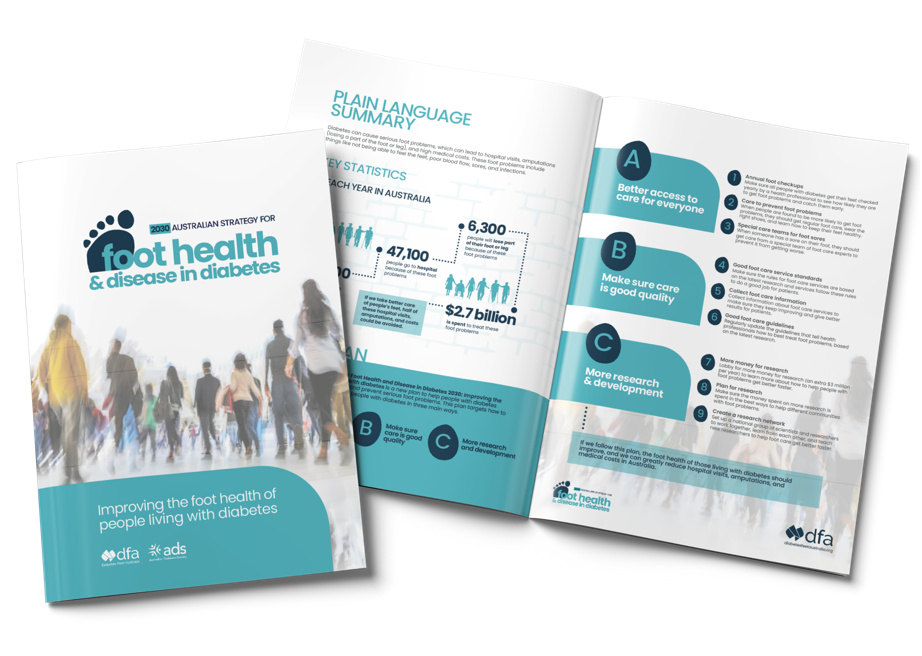


Here at DFA, our focus is on improving the foot health of people living with diabetes. The Australian strategy for foot health and disease in diabetes 2030 is a new plan to help people with diabetes take better care of their feet and prevent serious foot problems. This plan targets how to improve the foot health of all people with diabetes in three main ways.






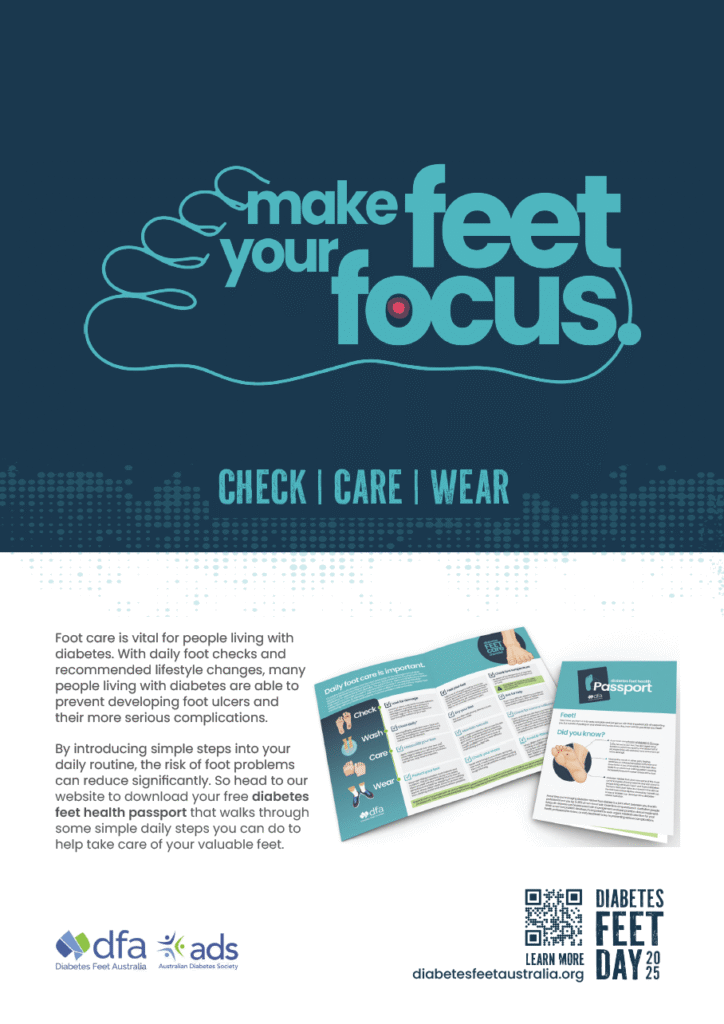
For Diabetes Feet Day, we’re making feet the national focus. So join us as we advocate, educate and spread awareness to help improve foot health outcomes for people living with diabetes. Check out, print and share our ready-made resources across your social channels, newsletter, or even decorate. With a range of social visuals, and factsheets, this is an easy way to share your feet focus and help spread awareness to improve foot health outcomes for people living with diabetes. #diabetesfeetday and tag us in your socials






We'd like to acknowledge and thank our Diabetes Feet Day Partners. Their valued support helps us build national awareness of diabetes-related feet health and disease, create and provide educational and campaign resources, and make 'feet the focus' to help us improve feet health outcomes for people living with diabetes.
The National Diabetes Services Scheme (NDSS) is an initiative of the Australian Government that commenced in 1987 and is administered by Diabetes Australia. The NDSS amins to enhance the capacity of people with diabetes to understand and self-manage their life with diabetes; access services, support and subsidised diabetes products.