
Globally, 7 in 10 adults (412 million people) living with diabetes are of working age. For millions of employees, diabetes is a daily reality – but in the workplace, it can often become a source of stress, stigma, and fear.
Despite growing awareness of employee well-being, many people with diabetes still struggle to balance their health with work expectations, leading them to hide or not be open about their condition. This ongoing struggle not only impacts mental well-being but also limits career growth.
As part of the World Diabetes Day focus on diabetes and well-being, this year the International Diabetes Federation is calling for more inclusive and supportive workplaces where people with diabetes feel supported, not stigmatised.
It’s time to eliminate misconceptions, educate employers, and foster environments where employees with diabetes can manage their condition without fear.
By strengthening awareness and understanding, we can ensure workplaces where people living with diabetes feel safe, valued, and empowered to thrive –without compromising their health or ambitions.


A common symptom of diabetes is damage to the nerves in your feet. The damaged nerve function is called neuropathy, and about up to half of all people with diabetes have some form of nerve damage. Because of the loss of sensation in the foot, recognising when you have injured your foot is less likely as you may not feel the pain. And if you’re less likely to notice an injury, this can then progress to a more serious stage of developing a foot ulcer.
A foot ulcer refers to a break in the skin on the foot, and even minor injuries caused by a small cut, bruise or a blister can develop into a diabetes-related foot ulcer. Having a foot ulcer is an unpleasant experience, which may cause pain and discomfort, the need for regular attention (e.g. wound dressing), and often takes a lengthy time to heal.

Effective preventative care can greatly reduce the risk of diabetes-related foot disease. It’s important that all people living with diabetes undergo at least a yearly foot screening. Knowing your risk level helps determine how often you need a foot check each year and if you may need to see a diabetes foot team for more specialised diagnosis, management and treatment.

If you're unsure of who to talk to about your diabetes and the health of your feet, check with your General Practitioner, podiatrist, your local community health centre, Diabetes Educator or Nurse.

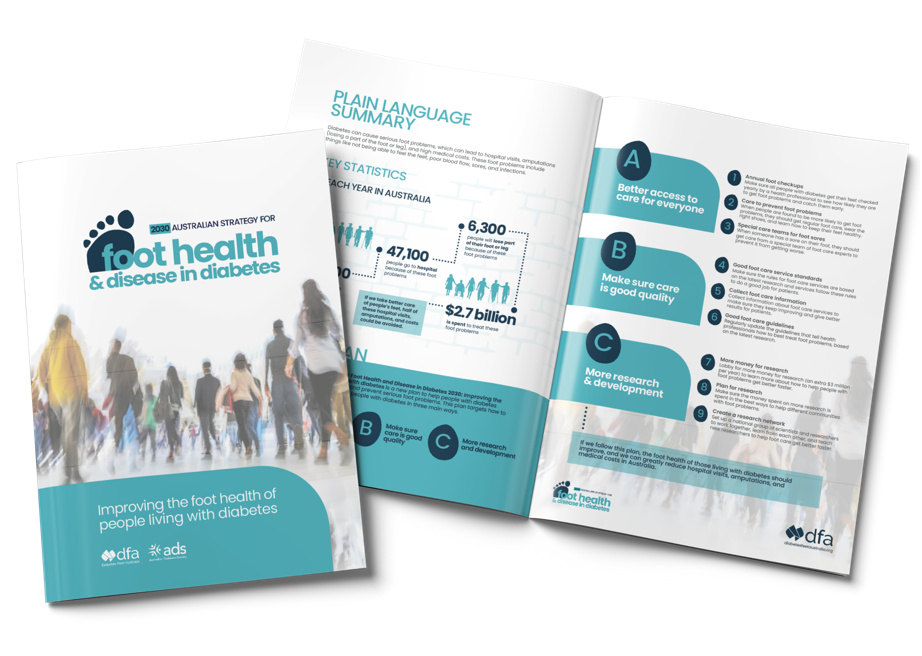


Here at DFA, our focus is on improving the foot health of people living with diabetes. The Australian strategy for foot health and disease in diabetes 2030 is a new plan to help people with diabetes take better care of their feet and prevent serious foot problems. This plan targets how to improve the foot health of all people with diabetes in three main ways.





Each year in Australia, an estimated 510,000 people are living with diabetes-related foot disease. We invite you to watch our insightful 'Wound Healing' practical module with Dr Pam Chen which focuses on the foundation blocks of DFU healing, standard of care, adjunct therapies, practical tips and an insightful discussion with our IWGDF world leading experts Professor Fran Game (UK) and Professor Ketan Dhatariya (UK).
We'd like to thank URGO Medical for their support as our official webinar partner for the release of this module.

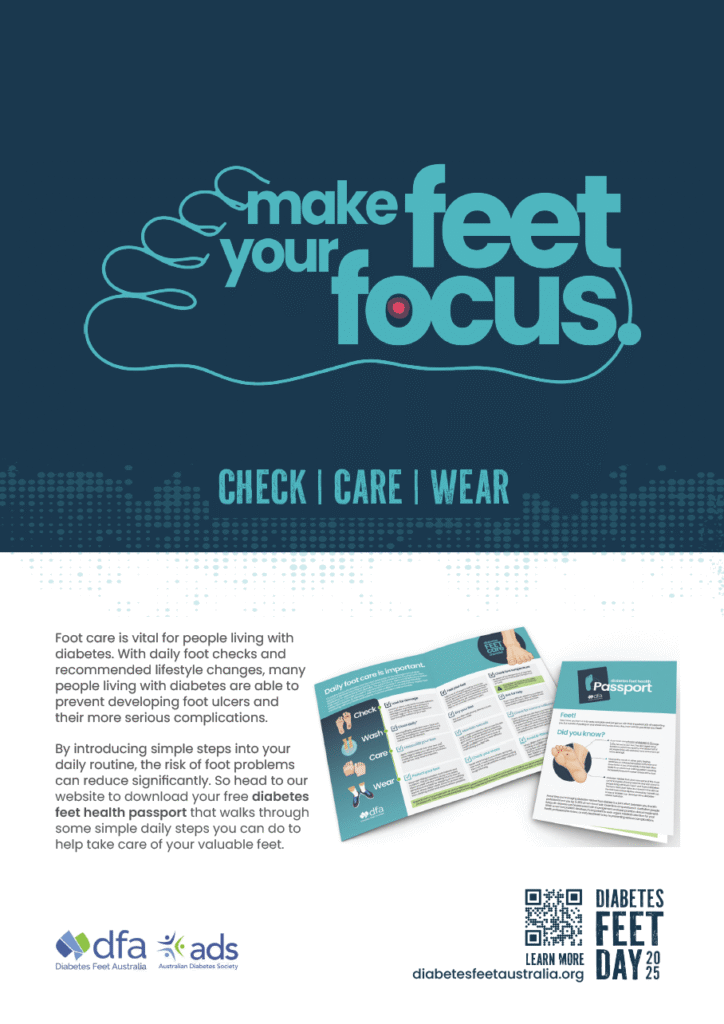
Check out, print and share our ready-made resources for WDD and every day. Help us spread awareness to improve foot health outcomes for people living with diabetes.